

Let’s be honest, most of us have killed a houseplant or two. Maybe it was a fiddle-leaf fig that sulked in the corner, or a peace lily that wilted the moment you forgot to water it. If you’ve been searching for a plant that actually fits your lifestyle, your busy schedule, and your dimly lit hallway, the cast iron plant might just be your perfect match.
Known botanically as Aspidistra elatior, the cast iron plant has earned its tough-sounding name for a very good reason. It thrives in conditions that would send most houseplants to an early grave, deep shade, irregular watering, fluctuating temperatures, and even neglect. Whether you’re a seasoned plant lover or a first-time buyer, the cast iron plant benefits are genuinely hard to ignore. In this guide, we’ll walk you through everything you need to know: why it’s ideal for low-light spaces, how to care for it properly, and why it deserves a spot in your home today.
What Is a Cast Iron Plant?
The cast iron plant is a slow-growing, evergreen perennial native to Japan and Taiwan. It produces long, arching, dark green leaves that are bold, glossy, and architectural in appearance. Unlike most tropical houseplants, it doesn’t demand bright sunlight, humid conditions, or constant attention.
It earned the nickname “Bar Room Plant” in the Victorian era because it survived the dimly lit, smoky interiors of pubs and taverns, places where virtually nothing else would grow. If that doesn’t tell you everything about its resilience, nothing will.
Top Cast Iron Plant Benefits You Should Know
1. It Thrives in Low Light Like No Other Plant
This is arguably the biggest cast iron plant benefit. Most indoor plants need indirect bright light to survive, but the cast iron plant genuinely tolerates deep shade. North-facing rooms, dim hallways, basement offices, interior spaces without windows nearby this plant handles them all without complaint.
The secret lies in its slow metabolic rate. It doesn’t need a flood of sunlight to photosynthesise. It simply gets on with the job quietly and steadily, which makes it one of the very few plants truly suited to low-light indoor areas.
2. Extremely Low Maintenance
If you travel frequently, work long hours, or simply forget to water your plants (no judgement), the cast iron plant is designed for you. It stores moisture efficiently and prefers to dry out slightly between waterings. Overwatering is actually more of a risk than underwatering, a refreshing change from most houseplants. A simple monthly feed during spring and summer is sufficient. No misting. No humidity trays. No fuss.
3. Excellent Air Quality Improvement
Like many leafy houseplants, the cast iron plant contributes to cleaner indoor air by absorbing common pollutants and releasing oxygen. While no plant is a substitute for proper ventilation, having lush greenery indoors has well-documented benefits for air quality and overall wellbeing particularly in office environments where airflow can be limited.
4. Non-Toxic to Pets and Children
One of the most underrated cast iron plant benefits is its safety. Unlike many popular houseplants such as pothos, lilies, and philodendrons the cast iron plant is non-toxic to cats, dogs, and children. This makes it a genuinely worry-free choice for family homes and pet-friendly households.
5. Long Lifespan and Slow, Steady Growth
The cast iron plant is a long-term investment. It’s slow-growing, yes, but that also means it won’t outgrow its pot within a season or demand constant repotting. A well-cared-for plant can live for decades. You’re not just buying a plant, you’re welcoming a long-term companion into your home.
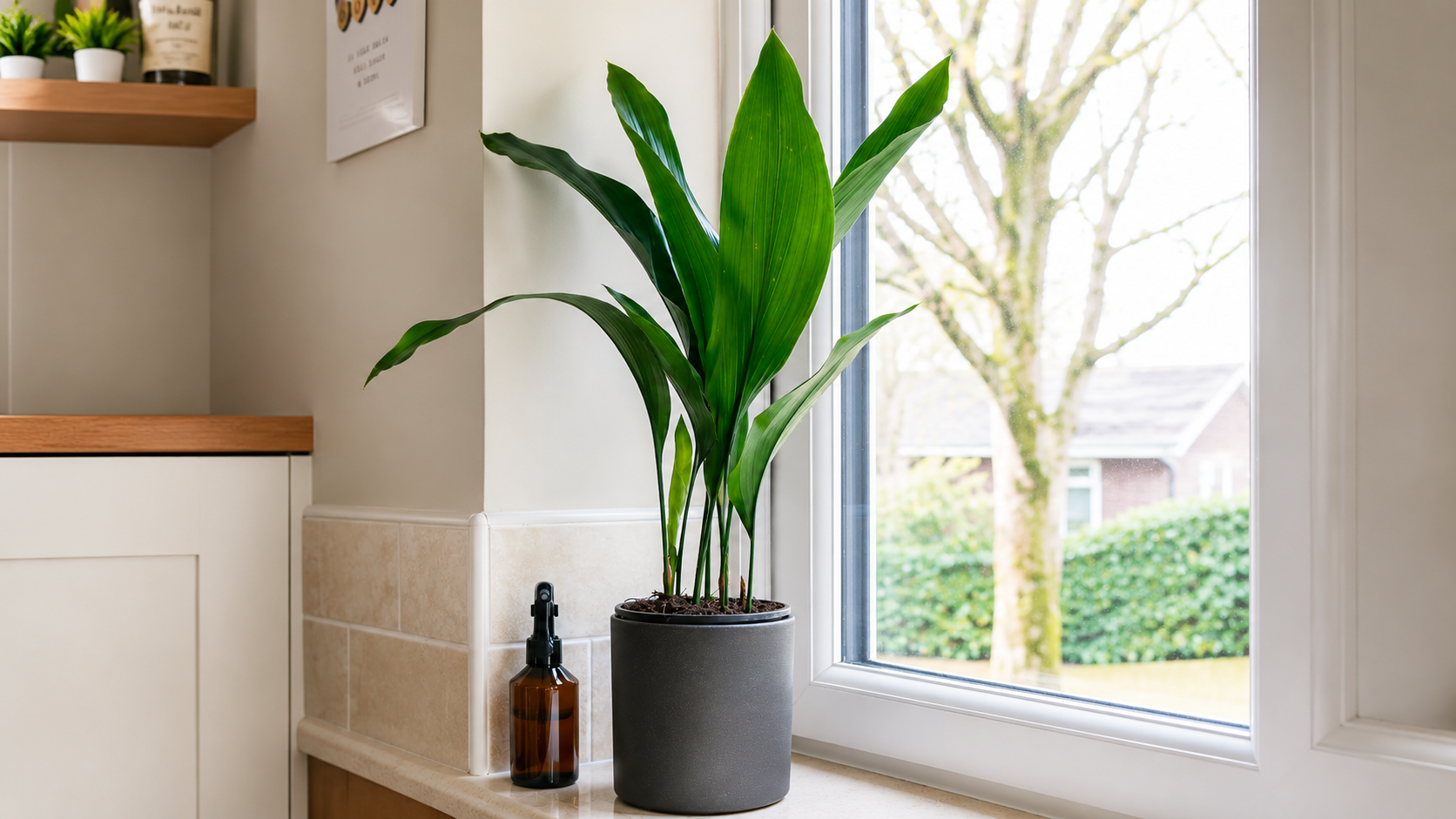
Cast Iron Plant Indoor Care: A Simple Routine
Good news: cast iron plant indoor care is about as straightforward as it gets. Here’s a quick breakdown of what this plant needs.
Light
- Ideal: Low to moderate indirect light
- Tolerates: Deep shade, north-facing rooms, dimly lit offices
- Avoid: Direct harsh sunlight, which can scorch the leaves
Watering
- Water once every 1-2 weeks in warmer months
- Reduce to once every 3-4 weeks in winter
- Always let the top inch of soil dry out before watering again
- Use room-temperature water when possible
Soil and Potting
- Use a well-draining general-purpose compost
- Ensure the pot has drainage holes to prevent waterlogging
- Repot every 2-3 years, or when roots start creeping out of the bottom
Temperature
- Comfortable between 7°C and 27°C
- Avoid cold draughts and frost
- Does not need misting or high humidity indoors
Feeding
- Feed with a balanced liquid fertiliser once a month during spring and summer
- No feeding needed in autumn and winter
Best Places to Keep a Cast Iron Plant Indoors
One of the greatest joys of cast iron plant indoors placement is its flexibility. Here are some ideal spots:
- Hallways and entryways: often the darkest part of the home, perfect for this plant
- Home offices: adds a calming, productive atmosphere without demanding attention
- Bathrooms: tolerates low light and indirect humidity from showers
- Living room corners: makes a bold, architectural statement as a floor plant
- Shaded bedrooms: safe for pets and children, and promotes a calming environment
Useful Tips for Getting the Best from Your Cast Iron Plant
- Wipe the leaves occasionally with a damp cloth to remove dust and keep them looking glossy
- Rotate the pot every few months so all sides receive equal light exposure
- Don’t repot too often the cast iron plant actually grows better when slightly root-bound
- Yellow leaves usually indicate overwatering; brown tips can signal low humidity or direct sun
- Propagate by division in spring simply separate the rhizomes and pot them individually
Where to Buy a Cast Iron Plant in the UK
If you’re ready to bring this remarkable plant home, Plants Depot offers quality cast iron plants delivered straight to your door, with sizes available to suit every space and budget.

Conclusion: The Plant That Fits Every Home
Not every home has a sunny windowsill. Not every plant owner has a rigid watering schedule. And not every space is blessed with natural light. That’s exactly why the cast iron plant deserves far more recognition than it gets. From its stunning, bold foliage to its legendary resilience, the cast iron plant benefits are real, practical, and genuinely impressive. Whether you’re styling a dim hallway, creating a calming office corner, or simply want a plant that won’t let you down, this is the one. Embrace the plant that’s built to last. Your low-light spaces have never had a better companion.
Frequently Asked Questions (FAQs)
Q1. How much light does a cast iron plant need indoors?
The cast iron plant is one of the few houseplants that thrives in very low light. It can survive in rooms with no direct sunlight, making it ideal for hallways, north-facing rooms, and interior spaces. Avoid placing it in direct sun, as this can scorch the leaves.
Q2. How often should I water a cast iron plant?
Water every 1-2 weeks during warmer months, and reduce this to every 3-4 weeks in winter. Always allow the top inch of soil to dry out between waterings. Overwatering is the most common mistake when in doubt, water less.
Q3. Is the cast iron plant safe for pets?
Yes. The cast iron plant is non-toxic to cats and dogs, making it one of the safest houseplants for pet-friendly homes.
Q4. Why are the leaves on my cast iron plant turning yellow?
Yellow leaves are most commonly caused by overwatering or waterlogged roots. Check that your pot has good drainage, reduce watering frequency, and ensure the soil is allowed to dry slightly between waterings.
Q5. Does the cast iron plant clean the air?
Yes, like most leafy plants, the cast iron plant absorbs carbon dioxide and certain airborne pollutants while releasing oxygen. It’s a beneficial addition to any indoor environment, particularly offices and rooms with limited ventilation.


