
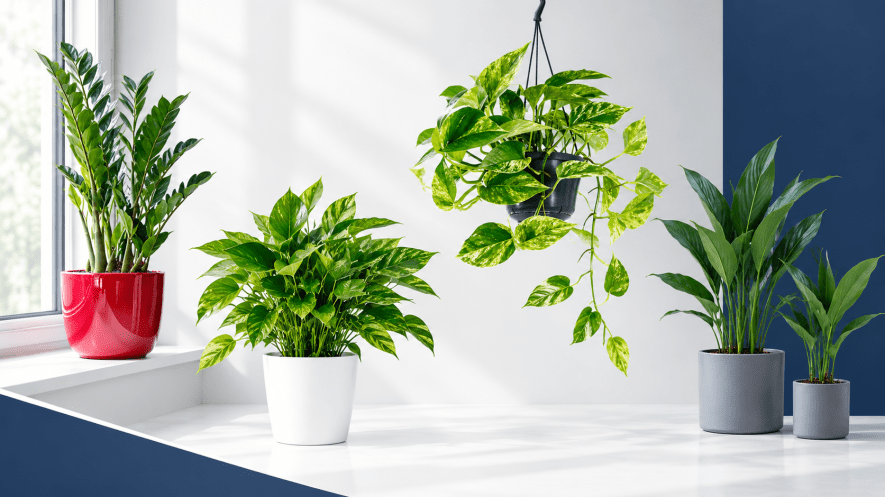
Short answer: the best low light houseplants for most UK homes are the snake plant, ZZ plant, cast iron plant and pothos. They cope with dim rooms and survive the odd missed watering. None can live in complete darkness, so every plant here needs at least some daylight from a window.
Plenty of British homes have gloomy spots: a north-facing flat, a hallway with one small window, or a desk tucked behind a bookcase. The right plant turns those spots from awkward to attractive. This guide explains what “low light” means, which plants cope best, and how to keep them healthy. If you want to browse first, you can explore the full range of indoor plants at Plants Depot.
What Does Low Light Mean for Indoor Plants?
Plant labels use light terms loosely, so here is how to read them:
- Direct sunlight: the sun’s rays fall straight on the leaves, as on a south-facing windowsill.
- Bright indirect light: the room is well lit, but the sun doesn’t touch the plant.
- Low light: a room that is clearly dimmer. You can still read comfortably, but shadows are soft and faint.
Low light never means no light. Plants need daylight to make food, and a room that needs the lamp on all day is too dark.
Several things change the light your plant actually gets:
- Window direction. North-facing windows give the least light. East and west windows sit in the middle, and south-facing ones give the most.
- Distance from the window. Light drops sharply as you move away. A plant 3 metres from a window gets far less than one on the sill.
- Obstructions. Nets, blinds, tall hedges and neighbouring buildings all cut light.
- Season. In a British winter, daylight can be a fraction of its summer level, so a spot that works in July may feel dim in December.
A simple test: hold your hand a foot above the spot at midday. A sharp shadow means decent light, a fuzzy one means moderate light, and barely any shadow means it is probably too dark.
Best Low Light Houseplants for Your Home
Not every plant here copes equally well with shade. The first five handle the dimmest conditions. Peace lily, Chinese evergreen, parlour palm, dracaena and spider plant sit at the brighter end of low light, so give them a spot closer to a window.
Snake Plant (Dracaena trifasciata, formerly Sansevieria)
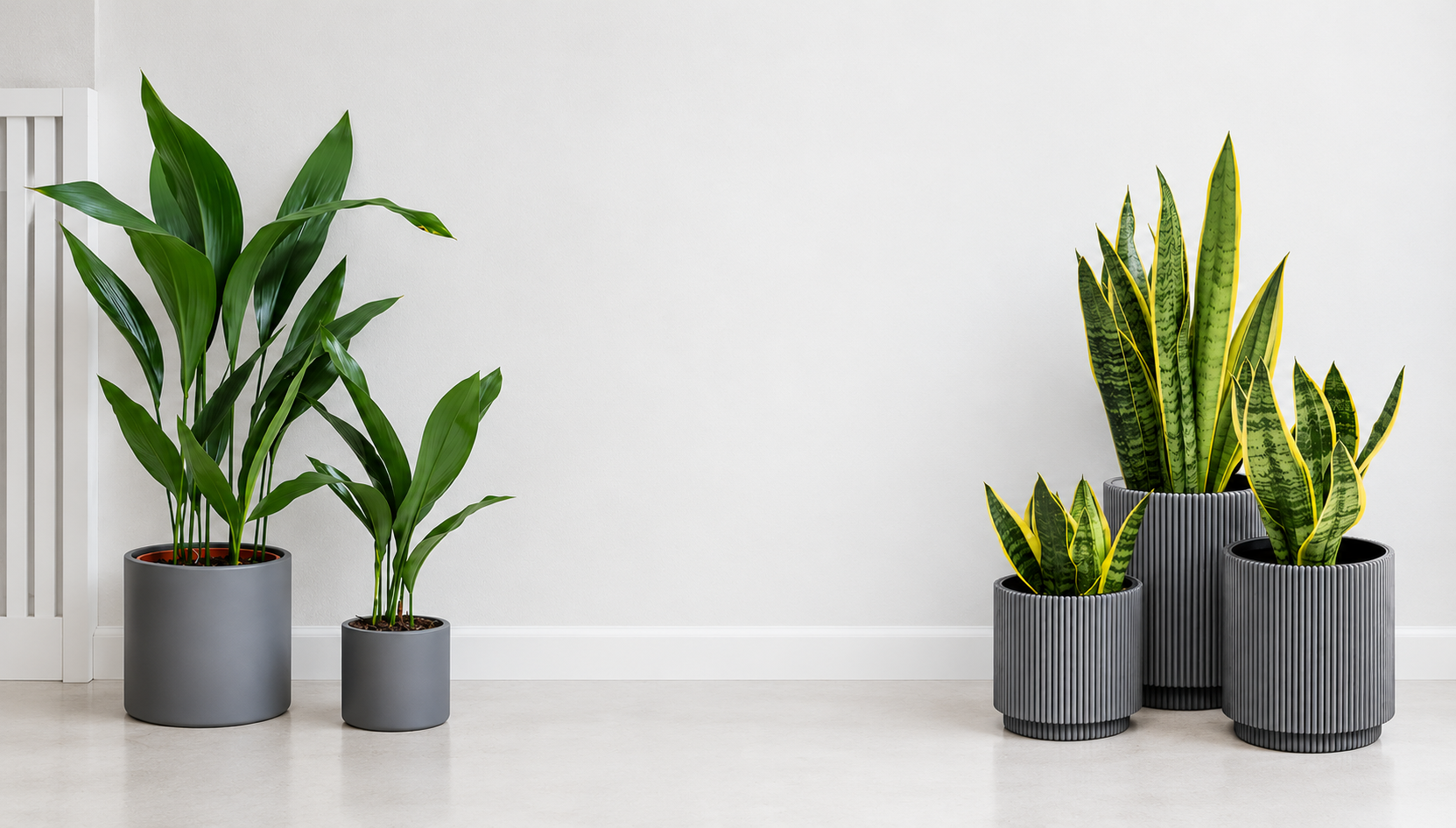
Upright, architectural leaves suit hallways and bedrooms. Growth slows in low light, so there is no rush to repot. Let the compost dry out between waterings, especially in winter. It is mildly toxic to cats and dogs if eaten.
ZZ Plant (Zamioculcas zamiifolia)
Thick underground stems store water, so it copes well with irregular watering. It suits low to medium indirect light. Water only when the soil is dry. All parts are toxic if eaten, and the sap can irritate skin.
Cast Iron Plant (Aspidistra elatior)
Few houseplants match it for coping with shade, and it suits north-facing rooms. It still needs some daylight. Water lightly and avoid soggy soil. The ASPCA lists it as non-toxic to pets, though chewing any plant can upset a stomach.
Pothos (Epipremnum aureum)
This trailing plant suits shelves and high spots. It copes with low light, but variegated leaves lose their patterning in dim rooms. Water when the top few centimetres of compost feel dry. It is toxic to pets.
Heartleaf Philodendron (Philodendron hederaceum)
Similar in habit to pothos, with soft, heart-shaped leaves. It manages in low to medium indirect light and trails well from shelves. Water when the top layer dries. It is toxic to pets.
Peace Lily (Spathiphyllum)
It copes with low to medium light but rarely flowers in deep shade. It droops dramatically when thirsty and recovers quickly after watering. It is toxic to cats and dogs.
Chinese Evergreen (Aglaonema)
Darker green varieties handle low light better than silver or pink ones. Water when the top layer of compost dries. Keep it away from cold draughts. It is toxic to pets.
Parlour Palm (Chamaedorea elegans)
Also sold as parlor palm, this slow-growing palm suits living room corners in low to medium indirect light. Keep the compost lightly moist but never soggy. The ASPCA lists it as non-toxic to cats and dogs.
Dracaena (Dracaena fragrans, D. marginata)
These taller plants manage in lower light but grow best in medium indirect light. Let the top of the compost dry between waterings. They are toxic to pets.
Spider Plant (Chlorophytum comosum)
It prefers bright indirect light but copes with dimmer rooms, with slower growth and plainer stripes. Water when the top of the compost dries. The ASPCA lists it as non-toxic to pets.
| Plant | Light needs | Watering | Maintenance |
| Snake plant | Low to bright indirect | Sparingly; let compost dry | Very low |
| ZZ plant | Low to medium indirect | Sparingly; let compost dry | Very low |
| Cast iron plant | Low light, including shady spots | Light, infrequent | Very low |
| Pothos | Low to bright indirect | When top few cm dry | Low |
| Heartleaf philodendron | Low to medium indirect | When top layer dries | Low |
| Peace lily | Low to medium indirect | Keep slightly moist | Low to medium |
| Chinese evergreen | Low to medium indirect | When top layer dries | Low |
| Parlor palm | Low to medium indirect | Keep lightly moist | Low |
| Dracaena | Medium indirect; tolerates lower | When top of compost dries | Low |
| Spider plant | Medium to bright indirect | When top layer dries | Low |
Easy-Care Houseplants for Low Light in Different Rooms
Match the plant to the room, not just the style. For more room-by-room ideas, our guide to choosing the best indoor plants for every room goes into more detail.
- Bedrooms: choose compact, calm plants such as a snake plant or parlour palm. Keep them well within 3 metres of the window.
- Hallways: a cast iron plant or ZZ plant works if a window or glazed door lets in daylight. A windowless hallway needs a grow light, or the plant will decline.
- Living room corners: a taller dracaena or peace lily fills the space. Rotate it occasionally so it grows evenly.
- Home offices: a ZZ plant or pothos on a shelf adds greenery without much fuss.
- Shelves and compact spaces: trailing pothos or heartleaf philodendron softens edges.
For shaded rooms in general, our selection of houseplants for shady spaces is a good place to start. Many beginners also like our easy-care houseplants, which suit busy households. If you prefer a ready-made combination, the shade-friendly plant set offers a convenient way to try several plants together.
How to Care for Houseplants in Low-Light Conditions
Plants use water more slowly when light is limited, because less light means less growth. That is why overwatering is the biggest risk.
- Check the soil first. Push a finger about 2–3 cm into the compost. If it feels damp, wait.
- Skip rigid schedules. A plant may need water every fortnight in summer and only monthly in winter.
- Wipe the leaves. Dust blocks light, so a damp cloth every month or so helps.
- Rotate occasionally. A quarter turn every few weeks keeps growth even.
- Watch for stress. Pale new leaves, leggy stems, yellowing lower leaves and slow growth all signal too little light or too much water.
- Add a grow light if needed. A full-spectrum LED can rescue a dim spot or a windowless room. Most foliage plants do well with roughly 8–12 hours a day, so a plug-in timer helps. Follow the manufacturer’s guidance on distance.
Choosing the Right Plant Pots for Shady Indoor Spaces
Pot choice affects health more than many people expect. Choose a pot only slightly larger than the root ball, because extra compost stays wet for longer in low light.
Always choose pots with drainage holes. Alternatively, use a plain nursery pot inside a decorative outer pot and empty any water that collects. Use a well-draining houseplant compost.
Self-watering pots can help if you travel or often forget to water. They don’t remove the need to check the soil, though, and plants such as snake plants and ZZ plants prefer to dry out between waterings.
Common Mistakes to Avoid When Growing Low-Light Houseplants
- Overwatering and poor drainage. Soggy compost causes more deaths than shade does.
- Using a room with no daylight. Plants need a window, or a grow light if there isn’t one.
- Choosing a plant that needs more light than the room offers. Match the plant to the spot.
- Using an oversized pot. It keeps the compost wet.
- Overfeeding. Slow-growing plants need little fertiliser. Feed lightly in spring and summer only.
- Overlooking stress signs. Act early on yellowing or stretching.
Bring More Greenery into Your Home
Choosing suitable low light houseplants, giving them some daylight and watering with care can transform even the dimmest room. Start with one tough plant, learn how your light changes through the seasons, and build from there. When you are ready, you can explore the Plants Depot indoor plant collection.
Frequently Asked Questions About Low Light Houseplants
What are the easiest houseplants to grow in low light?
Snake plants, ZZ plants and cast iron plants are the most dependable. They cope with dim rooms and infrequent watering, which makes them popular with beginners.
Can indoor plants survive in rooms without sunlight?
Not for long. All plants need some light to photosynthesise. A room with a window and soft natural light can work, but a windowless room needs a suitable grow light.
Which houseplants are best for shady corners?
Cast iron plants, ZZ plants, snake plants and pothos cope well with shady corners. Place them as close to the window as practical, and rotate them occasionally for even growth.
How often should you water houseplants in low light?
There is no fixed schedule. Plants use water more slowly in low light, so check the compost first and water only when the top few centimetres feel dry. Most need less water in winter.
Are low-light houseplants suitable for beginners?
Yes, many are. Plants such as the snake plant and ZZ plant tolerate small mistakes. They still need some light, and they grow slowly in dimmer spots.
Do low-light indoor plants need artificial lighting?
Not always. If your room receives some daylight, they can manage without it. In very dim rooms, or during dark winter months, a grow light can keep growth healthy.


