

If you’ve ever scrolled past a houseplant with huge, glossy leaves full of natural holes and wondered what it was, you’ve met the Swiss Cheese Plant. It’s one of the most popular houseplants in the UK, and for good reason it looks dramatic, grows quickly, and is genuinely easy to keep alive once you understand its basic needs. This guide covers everything you need for confident Swiss Cheese Plant care, from light and watering to repotting, propagation, and troubleshooting common problems.
What is a Swiss Cheese Plant?
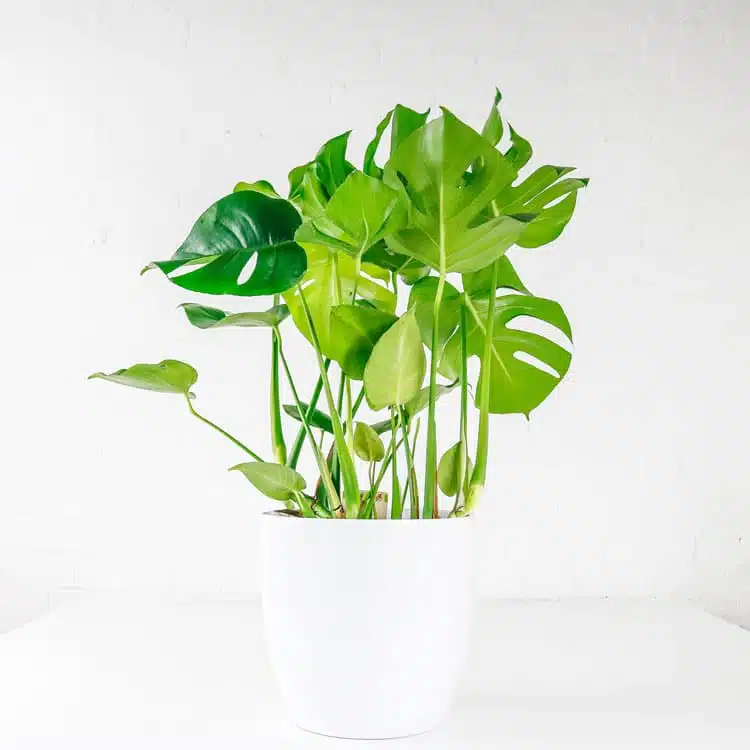
The Swiss Cheese Plant is the common name for Monstera Deliciosa, a tropical climbing plant native to the rainforests of Central America. It gets its nickname from the natural splits and holes (called fenestrations) that develop in its leaves as the plant matures. In the wild, these holes aren’t just decorative. They let dappled sunlight pass through the leaf to reach the plant’s lower growth, helping it survive on shady rainforest floors. Indoors, they simply make the plant look striking which is why it’s become such a favourite for living rooms, offices, and bright hallways.
Younger Monstera plants usually have solid, heart-shaped leaves. The famous splits only appear once the plant is more mature and getting the right conditions, which is something we’ll cover shortly. You may also come across Monstera Adansonii, a smaller, more compact relative that’s sometimes sold under the same “Swiss Cheese Plant” name. The care advice below applies broadly to both, though Monstera Deliciosa is the larger, more common variety.
Swiss Cheese Plant Light Requirements
Good light is one of the most important parts of Swiss Cheese Plant care, and it’s where a lot of plant owners go wrong.
- Bright, indirect light is ideal. A spot near an east- or west-facing window works well.
- Avoid direct, harsh sunlight, especially through south-facing glass in summer. It can scorch the leaves and cause pale, bleached patches.
- Avoid deep shade. Too little light will slow growth and reduce the chances of your plant developing its signature split leaves.
If your only available spot is quite dim, the plant will usually survive, but growth will be slower and leaves may stay smaller and unsplit. Rotating the pot every couple of weeks also helps the plant grow evenly, rather than leaning towards the light source.
Swiss Cheese Plant Watering
Swiss Cheese Plant watering is all about balance. This plant would much rather be slightly underwatered than sitting in soggy soil.
- Check the soil before watering. Only water once the top 5-7cm of soil feels dry to the touch.
- In practice, this usually means watering every 1-2 weeks in spring and summer, and less often every 2-3 weeks in autumn and winter when growth slows.
- Water thoroughly until it runs freely from the drainage holes, then let any excess drain away completely. Never leave the pot sitting in a saucer of water.
- Watch the leaves for clues. Drooping or curling leaves often mean the plant is thirsty, while yellowing leaves are a classic sign of overwatering.
As with most houseplants, it’s far easier to revive an underwatered Monstera than one suffering from root rot, so when in doubt, wait another day or two.
Best Soil and Pot
Swiss Cheese Plants need soil that holds some moisture but drains quickly, since their roots dislike sitting wet.
Best soil mix:
- A good-quality, peat-free houseplant compost as a base
- Perlite or orchid bark mixed in to improve drainage and airflow
- Optionally, a handful of horticultural charcoal to help keep the mix fresh
Choosing a pot:
- Always pick a pot with drainage holes.
- Terracotta pots are a great option, as the porous material helps excess moisture evaporate.
- Choose a pot only slightly larger than the current root ball. A pot that’s too big holds excess moisture the roots can’t use, increasing the risk of root rot.
If you’re unsure which pot suits your plant and space best, our ultimate plant pot guide walks through choosing the right size, material, and drainage for different plants. You’ll also find a full range of suitable options in our plant pots collection.
Humidity and Temperature
Being a rainforest native, the Swiss Cheese Plant enjoys warmth and a bit of humidity, though it’s more adaptable than people expect.
- Ideal temperature: 18-27°C. Keep it away from cold draughts, single-glazed windowsills in winter, and radiators or other direct heat sources.
- Humidity: Average UK home humidity is generally fine, but the plant will reward higher humidity with glossier, faster growth. You can boost humidity by:
- Misting the leaves a few times a week
- Grouping it with other houseplants
- Using a pebble tray filled with water beneath the pot
- Running a small humidifier nearby in drier months
Fertilising
Feed your Swiss Cheese Plant during its growing season to support healthy new leaves.
- Use a balanced, general-purpose liquid houseplant fertiliser.
- Feed every 4-6 weeks from spring through to early autumn.
- Reduce or stop feeding entirely over autumn and winter, when the plant’s growth naturally slows and it needs fewer nutrients.
Always feed into moist soil rather than dry soil, as this helps prevent the roots from being scorched by concentrated fertiliser.
Repotting
Swiss Cheese Plants are fairly fast growers, so they’ll need repotting every so often to keep up.
- Frequency: Roughly every 1-2 years, or whenever you notice roots circling the bottom of the pot or growing through the drainage holes.
- Best time: Spring or early summer, when the plant is actively growing and will recover quickly.
- How to do it: Choose a pot one size up, add fresh, well-draining soil, and gently loosen the roots before repositioning the plant. Water well after repotting to help it settle.
Browse our plant pots if your current pot has become too small, and check out our plant accessories for moss poles and other supports that help larger plants climb as they grow.
Pruning and Maintenance
Regular light maintenance keeps your Monstera looking tidy and encourages healthy new growth.
- Wipe the leaves with a damp cloth every few weeks to remove dust and help the plant photosynthesise efficiently.
- Remove yellow or damaged leaves by cutting them at the base with clean, sharp scissors.
- Prune to control size if the plant is outgrowing its space cutting just above a node encourages bushier growth.
- Support climbing growth with a moss pole or trellis. In the wild, Monsteras climb trees, and giving them something to climb indoors leads to larger, more mature leaves.
How to Encourage Split Leaves
One of the most common questions we get is how to make a Swiss Cheese Plant’s leaves split. A few conditions make a real difference:
- Give it enough light. Bright, indirect light is the single biggest factor in fenestration.
- Let it mature. Young plants rarely produce split leaves this typically starts once the plant has several mature leaves already.
- Provide support to climb. Plants grown up a moss pole tend to fenestrate more than those left to trail.
- Keep care consistent. Steady watering, feeding, and warmth all support the strong growth needed for fenestration.
Patience is genuinely part of the process here, a well-cared-for plant will naturally start producing split leaves as it grows.
Common Problems and Solutions
| Problem | Likely Cause | Solution |
| Yellowing leaves | Overwatering, poor drainage | Let soil dry out more between waterings; check pot has drainage |
| Curling or drooping leaves | Underwatering, low humidity | Water thoroughly; increase humidity |
| Brown, crispy leaf edges | Low humidity, too much direct sun | Move out of direct light; mist regularly |
| No splits in leaves | Insufficient light, plant still young | Move to a brighter spot; be patient |
| Small or slow growth | Low light, lack of nutrients | Improve light; feed during growing season |
| Pests (spider mites, mealybugs) | Dry air, low humidity | Wipe leaves, increase humidity, treat with insecticidal soap |
Propagation
Propagating a Swiss Cheese Plant is a simple, satisfying way to create new plants for free.
- Find a healthy stem section with at least one node (the small bump where a leaf or aerial root grows) and one leaf.
- Cut just below the node using clean, sharp scissors or secateurs.
- Root in water or soil:
- In water: place the cutting in a jar, changing the water every few days, until roots appear (usually 2-4 weeks).
- In soil: plant directly into moist, well-draining compost and keep humidity high while it establishes.
- Pot on once roots are a few centimetres long, using a well-draining mix as described earlier.
Spring and summer are the best times to propagate, as the warmth and light help new roots form more quickly.
General Indoor Care Tips
- Keep your plant away from cold draughts and heating vents.
- Rotate it occasionally for even, balanced growth.
- Dust the leaves regularly rather than letting them build up grime.
- Keep an eye out for pests, especially in drier winter months.
- If you’re building a wider indoor plant collection, our garden plants range has other easy-care options worth exploring alongside your Monstera.
Final Thoughts
The Swiss Cheese Plant earns its popularity honestly because it’s bold, easy-going, and rewarding to watch grow, from its first solid leaves right through to its first dramatic splits. Get the basics right, bright indirect light, careful watering, and well-draining soil and it will largely take care of itself. Ready to bring one home? Explore our at Plants Depot, along with the pots and accessories to help it thrive from day one.
Frequently Asked Questions
How often should you water a Swiss Cheese Plant?
Water once the top 5-7cm of soil feels dry, which is usually every 1-2 weeks in spring and summer, and every 2-3 weeks in autumn and winter. Always check the soil rather than sticking to a strict schedule, as watering needs vary with light, temperature, and pot size.
How much light does a Swiss Cheese Plant need?
It needs bright, indirect light for the healthiest growth. Direct midday sun can scorch the leaves, while very low light will slow growth and reduce the chances of the leaves developing their characteristic splits.
Why are my Swiss Cheese Plant leaves turning yellow?
Yellowing leaves are most commonly caused by overwatering or poor drainage. Let the soil dry out more between waterings, check the pot has drainage holes, and make sure it isn’t sitting in water.
How do I make my Swiss Cheese Plant leaves split?
Consistent bright, indirect light, patience while the plant matures, and support such as a moss pole all encourage fenestration. Split leaves generally only appear once the plant is established and well cared for.
What type of soil is best for a Swiss Cheese Plant?
A well-draining houseplant compost mixed with perlite or orchid bark works best. This holds enough moisture for the roots while allowing excess water to drain away quickly, reducing the risk of root rot.
Does a Swiss Cheese Plant need high humidity?
It prefers moderate to high humidity but adapts well to average UK home conditions. Misting, grouping plants together, or using a pebble tray can help boost humidity during drier months.
How often should you repot a Swiss Cheese Plant?
Repot roughly every 1-2 years, or sooner if you notice roots growing through the drainage holes or circling the base of the pot. Spring is the best time, as the plant recovers fastest during its active growing season.
How do you propagate a Swiss Cheese Plant?
Take a stem cutting with at least one node and one leaf, then root it in water or moist soil. Once roots are a few centimetres long, pot the cutting into well-draining compost.
Can a Swiss Cheese Plant grow in low light?
It can survive in lower light, but growth will be slower, leaves tend to stay smaller, and fenestration is less likely. For the best-looking plant, bright, indirect light is strongly recommended.
Is Monstera Deliciosa easy to care for?
Yes it’s widely considered one of the easiest houseplants for beginners. With bright, indirect light, occasional watering, and well-draining soil, it’s a forgiving, fast-growing plant that suits most homes.


