
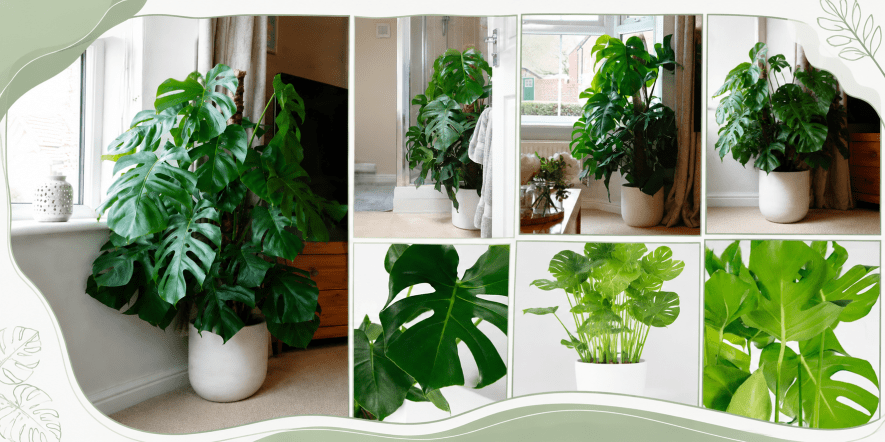
If one houseplant sums up the “urban jungle” look, it’s the Swiss Cheese Plant. Those glossy, split leaves have become shorthand for good taste in interiors, and behind the Instagram appeal is a genuinely easy-going plant that rewards a little understanding with years of lush growth. Here’s everything you need to know about Swiss Cheese Plant care, from light and watering through to propagation, pests and styling.
What Is a Swiss Cheese Plant?
The Swiss Cheese Plant (Monstera deliciosa) is a tropical climber native to the rainforests of Central America, where it scrambles up tree trunks chasing dappled light. As it matures, its leaves develop the splits and holes botanically called fenestrations that give the plant its name. In the wild, these are thought to help it withstand wind and let light reach lower leaves. For a head start, our Swiss Cheese Plant is grown to a healthy, established size, so you’re not waiting years to see those fenestrations appear.
Why It’s One of the Best Indoor House Plants
Monstera deliciosa combines dramatic looks with genuinely forgiving care, a rare combination. It tolerates a missed watering here and there without collapsing, which makes it a natural fit among indoor plants for homes and offices alike. Is a Swiss Cheese Plant suitable for beginners? Yes. It communicates its needs clearly, drooping usually means thirst, yellowing usually means too much water so mistakes are easy to spot and correct.
Benefits of Growing One Indoors
- Statement impact in any room
- Steady growth with new leaves through the season
- Low daily demands no fussy misting routines
- Adaptability to a range of light levels
- Longevity can live for decades with the right care
Different Varieties of Monstera
- Monstera deliciosa – large, deeply split leaves; a climbing habit; this is the classic “Swiss Cheese Plant.”
- Monstera adansonii – smaller leaves with oval holes; trails or climbs; popular for hanging baskets.
- Monstera deliciosa ‘Variegata’ – striking white and cream patches; slower growing; needs brighter light to hold its variegation.
- Monstera obliqua – extremely thin, lace-like leaves; a delicate climber; rare and considerably harder to grow well.
Ideal Growing Conditions
Light: Bright, indirect light is ideal. Does a Swiss Cheese Plant need direct sunlight? No harsh direct sun, especially through south-facing glass, can scorch the leaves. Can it grow in low light? It will survive, but growth slows and new leaves are less likely to fenestrate.
Temperature: 18-27°C suits it well; avoid cold draughts and spots too close to radiators.
Humidity and airflow: Average room humidity is generally fine, with a little extra helpful in very dry, centrally heated homes. Good air circulation reduces the risk of fungal problems.
Soil and Plant Pots
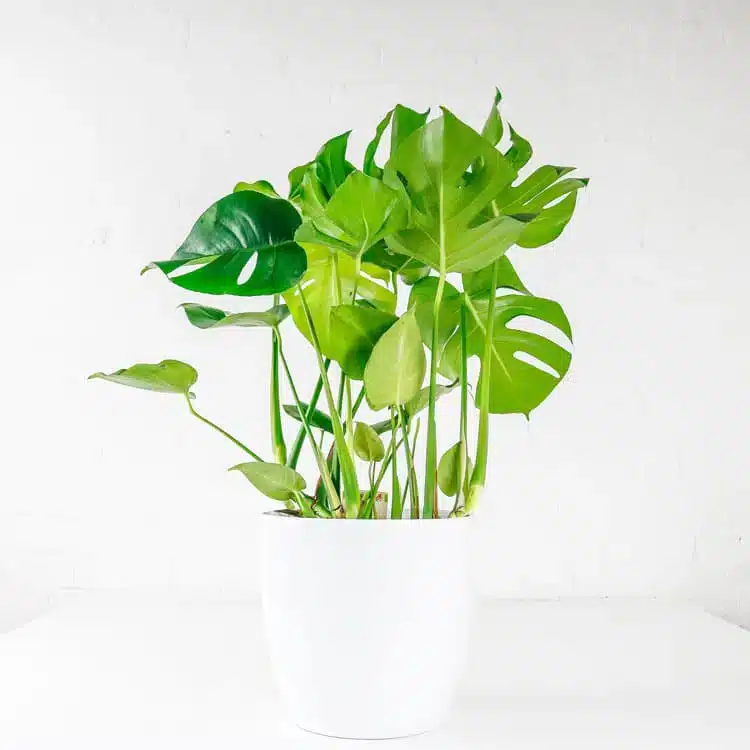
What’s the best soil for a Swiss Cheese Plant? A well-draining, chunky mix houseplant compost blended with perlite and orchid bark or coco coir gives roots air while retaining some moisture. Drainage holes are essential, as Monstera roots are prone to rot if left sitting in water; terracotta is a good porous option. Browse our Plant Pots for the right fit. How often should I report? Roughly every one to two years, or once roots show at the drainage holes. Move up just one pot size at a time.
Watering Guide Throughout the Year
How often should I water a Swiss Cheese Plant? Check the soil rather than the calendar:
- Spring/summer: water when the top third to half of the compost has dried, roughly every 7–10 days.
- Autumn/winter: growth slows, so let it dry further often every 2-3 weeks.
Water thoroughly until it drains from the base and empty the saucer. Drooping can signal thirst, but checking the soil first overwatering causes drooping too.
Fertilising and Feeding Schedule
Feed with a balanced, water-soluble liquid fertiliser roughly every four weeks in spring and summer. Stop feeding over autumn and winter, when growth naturally slows.
Pruning and Routine Maintenance
- Wipe leaves with a damp cloth every few weeks to keep them dust-free
- Snip yellowed or damaged leaves at the base with clean scissors
- Prune just above a leaf node to control size
- Provide a moss pole or stake climbing support encourages larger, more deeply split leaves
A few Plant Accessories, such as a moss pole or leaf-cleaning spray, make this routine easier to keep up.
Monstera Propagation Methods
- Stem cuttings in water: cut a section with at least one leaf, one node and ideally an aerial root, then root in water before potting into soil.
- Stem cuttings in soil: take the same cutting and plant directly into a well-draining mix, keeping it lightly moist until established.
- Air layering: wrap damp sphagnum moss around a node while still attached to the parent, then cut and pot once roots form.
Spring and early summer, when warmth speeds up rooting, are the best times to propagate.
Common Problems and How to Solve Them
Why are my Monstera leaves turning yellow?
Usually overwatering, though older leaves yellow naturally over time. Check the soil isn’t staying wet.
How do I encourage bigger split leaves?
More light (without direct sun), consistent feeding, and something to climb all encourage larger fenestrations as the plant matures.
How fast does a Monstera grow indoors?
With good light and warmth, it’s a moderately fast grower, often adding a new leaf every few weeks in the growing season, and slowing right down in winter.
Other issues: brown, crispy edges usually mean low humidity or underwatering; no fenestrations on new leaves usually means insufficient light; leggy, widely spaced growth means the plant is stretching towards light.
Common Pests and Diseases
- Spider mites – fine webbing and speckled leaves in dry air
- Mealybugs – cottony clusters in leaf joints
- Scale – small brown bumps on stems and leaf undersides
- Root rot – from consistently waterlogged soil, the main disease risk
Check leaves regularly, isolate any affected plant, and treat with insecticidal soap or neem oil weekly until clear.
Styling Ideas for Homes and Offices
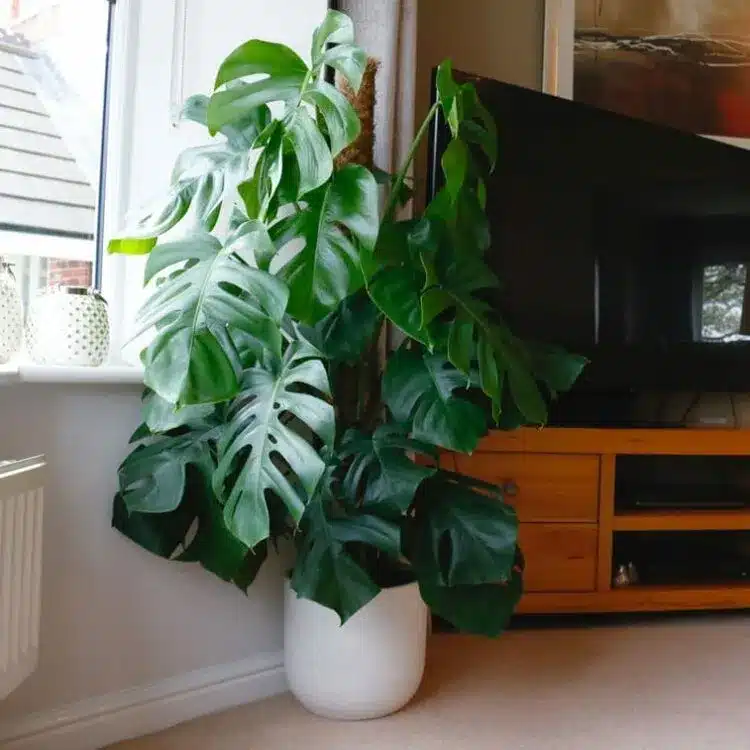
Use a Monstera as a floor-standing statement in a bright corner, or group it with other foliage for a layered, jungle look. In offices, position it near not directly in a bright window to soften hard lines. For real impact, pair it.
Common Mistakes to Avoid
- Watering on a fixed schedule instead of checking the soil
- Placing it in direct, harsh sunlight
- Using a pot without drainage
- Repotting into an oversized pot
- Ignoring the need for climbing support
- Feeding through winter
Growing Conditions at a Glance
- Light – bright, indirect light; low maintenance; avoid direct midday sun and rotate the pot occasionally.
- Watering – top third to half of the soil should dry out, low–medium maintenance; check soil before watering and reduce in winter.
- Temperature – 18-27°C, low maintenance; keep away from draughts and radiators.
- Humidity – average room humidity is fine; low maintenance, increase slightly in dry, heated rooms.
- Soil – a well-draining, chunky mix; low maintenance, blend compost with perlite and bark.
- Feeding – a balanced liquid fertiliser; low maintenance, feed monthly in spring/summer and pause in winter.
Is the Swiss Cheese Plant Pet-Friendly?
No. Like many Araceae family members, it contains calcium oxalate crystals and is considered toxic to cats and dogs if chewed, typically causing oral irritation or vomiting. Keep it out of reach, and contact a vet if ingestion is suspected.
Practical Care Tips All Year Round
- Check soil with your finger before watering, rather than following a strict schedule
- Rotate the pot every few weeks for even growth
- Support climbing stems early with a moss pole
- Wipe leaves regularly to aid photosynthesis
- Feed only during the active growing season
- Repot only when needed, sizing up gradually
Why Buy a Healthy Swiss Cheese Plant from Plants Depot
Starting with a strong, well-established plant makes a real difference to how quickly you’ll see those signature split leaves. Our collection is chosen and grown with care, so you get a healthy specimen from day one. The Swiss Cheese Plant earns its reputation as one of the best indoor tropical plants for good reason, striking looks, genuine resilience, and a growth habit that rewards patience. Whether you’re filling a bare corner or buying your first houseplant, it’s hard to go wrong with a Monstera deliciosa. Ready to bring one home? Explore our Swiss Cheese Plant range at Plants Depot, and if you’re planning a wider green refresh, take a look at our Garden Plants too there’s always room for a little more greenery.
FAQs
1. How often should I water a Swiss Cheese Plant?
When the top third to half of the compost has dried typically every 7-10 days in the growing season, every 2–3 weeks in winter.
2. Does a Swiss Cheese Plant need direct sunlight?
No, it prefers bright, indirect light and can scorch in strong direct sun.
3. Why are my Monstera leaves turning yellow?
Most commonly overwatering, though older leaves do yellow naturally.
4. How do I encourage bigger split leaves?
Bright indirect light, consistent feeding, and climbing support, as fenestrations develop with maturity.
5. Can a Swiss Cheese Plant grow in low light?
It can survive, but growth slows and leaves split less.
6. What is the best soil for a Swiss Cheese Plant?
A well-draining mix of compost, perlite, and orchid bark or coco coir.


