
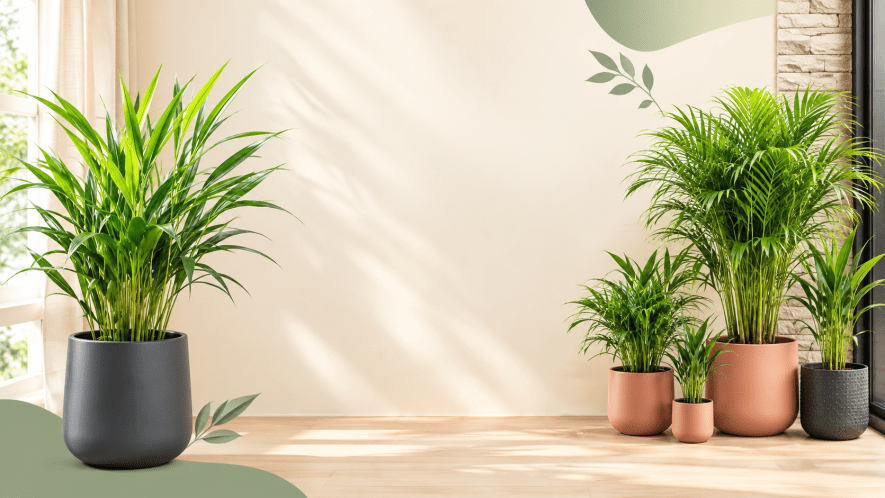
Few houseplants bring a room to life like an Areca Palm. Its arching, feathery fronds soften corners, fill empty floor space and give a home a relaxed, leafy feel. The plant also forgives a few mistakes, provided you get the basics right. Areca Palm care comes down to a handful of habits: the right light, sensible watering, free-draining soil and a little attention to humidity. This guide covers each one in plain terms, so you can keep your plant looking full and green.
What Is an Areca Palm?
The Areca Palm, botanically known as Dypsis lutescens, comes from Madagascar. You will also see it sold as the butterfly palm or golden cane palm. It grows as a cluster of slender, cane-like stems, and each stem carries long, gently curved fronds made up of narrow leaflets.
Indoors, an Areca Palm usually reaches somewhere between 1 and 1.8 metres, and it grows steadily rather than quickly. Its size, shape and tolerance of typical household conditions make it a popular indoor plant for living rooms, hallways and bright home offices. If you are still deciding where a palm might fit in your home, our guide on how to choose the best indoor plants for every room at home helps you match plants to spaces.
How to Care for an Areca Palm Indoors
Before we go into detail, here is the short version:
- Light: bright but indirect
- Watering: when the top few centimetres of soil feel dry
- Soil: light, well-draining and kept in a pot with drainage holes
- Humidity: moderate; avoid very dry air
- Temperature: steady, comfortable room temperatures
- Feeding: light, occasional feeding in spring and summer
- Pruning: remove only fully brown fronds
- Repotting: every couple of years, and only when the roots need space
The sections below explain each point.
Areca Palm Light Requirements
An Areca Palm grows best in bright, indirect light. A spot near an east-facing window works well, as does a position a metre or so back from a south- or west-facing window. A north-facing window can also suit it, although growth may slow in dimmer rooms. Direct sun through glass, especially in the afternoon, can scorch the fronds. Scorched leaves turn pale yellow or develop dry, bleached patches. If your only bright spot gets strong sun, hang a sheer curtain to soften the light. Low light causes a different set of problems. Fronds grow thin and stretched, and the whole plant looks sparse. If your palm leans towards the window, rotate the pot a quarter turn each week so it grows evenly.
How Often Should You Water an Areca Palm?
Skip the fixed schedule and check the soil instead. Push a finger about 2 to 3 centimetres into the compost. If it feels dry, water. If it still feels damp, wait a few more days.
When you do water, do it thoroughly:
- Pour water slowly over the soil until it runs out of the drainage holes.
- Let the pot drain for around ten minutes.
- Empty the saucer or decorative outer pot.
This approach soaks the whole root ball and stops the roots sitting in water. In practice, most homes end up watering roughly once a week in spring and summer. The plant needs less in autumn and winter, when growth slows, so you may only water every 10 to 14 days. Pot size, room temperature and light all change these timings, which is why the finger test works better than the calendar. Areca Palms dislike both extremes. Bone-dry soil stresses the fronds, while constantly soggy soil suffocates the roots and leads to rot. Aim for lightly moist compost, never wet and never dust-dry.
What Soil Is Best for an Areca Palm?
Areca Palm soil needs to hold a little moisture while letting excess water escape quickly. A standard peat-free multipurpose compost on its own often stays too wet, so lighten it. Mix roughly two parts compost with one part perlite, orchid bark or coarse horticultural grit. Drainage matters as much as the mix. Always plant into a container with drainage holes. If you love a decorative pot without holes, keep the palm in a plain plastic nursery pot and slip it inside the decorative one. Lift it out to water, let it drain, then put it back.
How Much Humidity Does an Areca Palm Need?
Areca Palm humidity preferences lean towards moderate. Average household air is usually acceptable, but central heating, radiators and air conditioning can dry the air enough to crisp the leaf tips.
You can raise the humidity around your plant in a few simple ways:
- Group it with other plants, which creates a slightly more humid pocket.
- Stand the pot on a tray of damp pebbles, keeping the pot base above the water.
- Place a small humidifier nearby during winter.
- Keep the palm away from radiators, fires and hot air vents.
Misting gives only a brief boost, so treat it as a minor extra rather than a fix. A bathroom or kitchen with good natural light can suit the plant nicely.
Temperature and Positioning for an Areca Palm
Areca Palms like the same temperatures that people do. Aim for roughly 18 to 24°C during the growing season, and try not to let the room fall below about 15°C. Temperatures under 10°C can damage the foliage. Position matters as much as the number on the thermostat. Keep your palm away from:
- Draughty doors and hallways
- Cold windowsills in winter
- Radiators and heaters
- Air conditioning outlets
Sudden swings in temperature stress the plant, and it often responds with browning fronds. Pick a spot that stays stable, then leave the palm there. It settles better when you avoid moving it around.
How to Fertilise an Areca Palm
Feeding helps most during the active growing season, from spring to late summer. Use a balanced liquid houseplant fertiliser, or one made for palms, roughly every four to six weeks. Dilute it to half the strength on the label if your palm sits in a small pot or grows slowly. Stop feeding in autumn and winter, when the plant rests. Always follow the manufacturer’s instructions, because too much fertiliser builds up salts in the soil and can burn the roots and leaf tips. Only feed a plant with damp compost, never dry.
How to Prune an Areca Palm
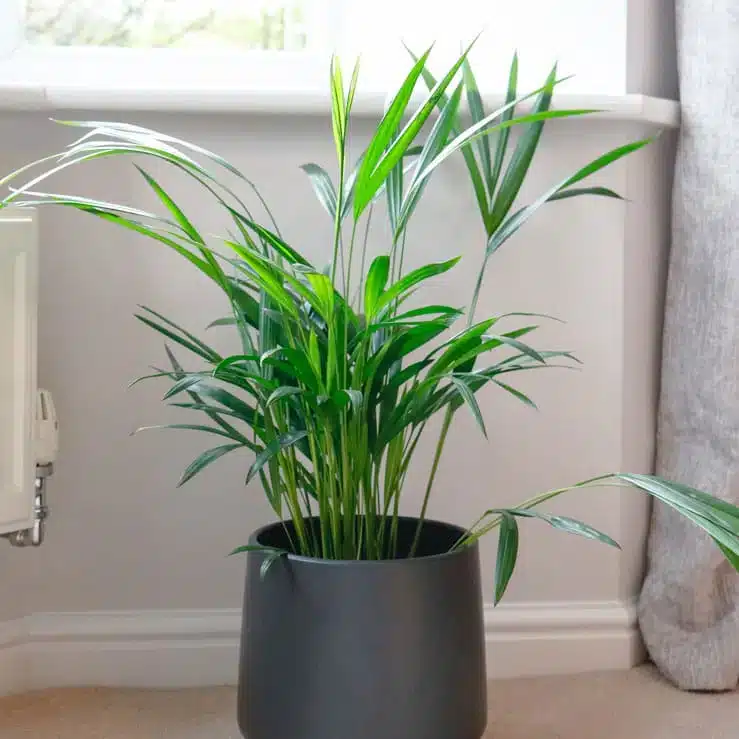
Areca Palm pruning is minimal. Each frond has a limited lifespan, and the oldest ones eventually turn yellow, then brown. Cut these off, and leave healthy green growth alone.
Follow these steps:
- Wipe clean, sharp secateurs or scissors with rubbing alcohol.
- Wait until the frond has turned fully brown or yellow.
- Cut it close to the base of the stem.
- For fronds with only brown tips, trim just the dead tissue, following the natural leaf shape.
Never cut into the growing point at the centre of a stem, and never remove green fronds simply to tidy the plant. Each palm cane produces new fronds from its crown, and damage there stops that cane growing.
When and How to Repot an Areca Palm
Areca Palms grow happily when slightly snug in their pots, so avoid repotting too soon. Most plants need fresh space every two to three years. Look for these signs:
- Roots growing out of the drainage holes
- Roots circling tightly at the top of the soil
- Water running straight through without soaking in
- The plant looking top-heavy or tipping over
The best time to repot is spring. Here is the basic process:
- Choose a pot only 2 to 5 centimetres wider than the current one, with drainage holes.
- Water the plant a day beforehand so the root ball slides out easily.
- Tip the plant out gently and loosen only the outer roots.
- Set it at the same depth as before in your fresh, free-draining mix.
- Water well and let it drain.
Areca Palms resent root disturbance, so handle them carefully and avoid splitting the clump unless you have to.
Common Areca Palm Problems and How to Fix Them
Most problems trace back to water, light or dry air. Check those three before you change anything else.
Areca Palm Brown Leaves
Brown leaves usually point to uneven watering, dry air or too much direct sun. Test the soil first. If the compost has dried out completely, water more consistently. If it stays wet, cut back and check the drainage. Also move the plant away from any hot, sunny glass. Remember that older lower fronds naturally brown with age, which is normal.
Areca Palm Yellow Leaves
Yellow leaves often signal overwatering, especially when the compost stays wet for days. Poor drainage, strong sunlight and a lack of nutrients can also cause it. Before you change your routine, check the soil moisture, the drainage holes and the light. If only the lowest fronds turn yellow, the plant is probably shedding old growth.
Drooping Leaves
Drooping happens when the plant is either too dry or sitting in waterlogged soil. Feel the compost. Dry soil calls for a thorough watering, while soggy soil needs time to dry out and possibly a check for root rot. Cold draughts and sudden temperature drops can also make fronds sag.
Dry or Crispy Leaf Tips
Crispy tips usually mean low humidity, irregular watering or fertiliser build-up. Move the palm away from heaters, water more evenly, and flush the soil with plain water every few months to wash out excess salts. Trim the dead tips and keep the leaf’s natural shape.
Final Thoughts on Areca Palm Care
A healthy Areca Palm needs bright, indirect light, water only when the top of the soil dries out, a free-draining mix and a spot with steady temperatures and reasonable humidity. Get those four things right and most other problems never appear. If you want to add height and texture to your home, browse our range of indoor plants or pick up an Areca Palm from Plants Depot and put these tips into practice.
Areca Palm Care FAQs
How often should you water an Areca Palm?
Water when the top 2 to 3 centimetres of soil feel dry. That usually means about once a week in warm months and every 10 to 14 days in winter.
How much light does an Areca Palm need?
It needs bright, indirect light for most of the day. Avoid strong direct sun, which can scorch the fronds.
Can an Areca Palm grow indoors?
Yes. It grows well indoors in a bright room with stable temperatures and free-draining soil.
Why are my Areca Palm leaves turning brown?
The usual causes are inconsistent watering, dry air, direct sun or cold draughts. Check these in that order.
Why are my Areca Palm leaves turning yellow?
Overwatering is the most common cause. Yellowing can also come from harsh light or old fronds ageing naturally.
What type of soil is best for an Areca Palm?
Choose a light, well-draining mix, such as peat-free compost blended with perlite or bark, in a pot with drainage holes.
How often should you fertilise an Areca Palm?
Feed roughly every four to six weeks in spring and summer with a diluted balanced fertiliser. Pause in autumn and winter.
When should you repot an Areca Palm?
Repot every two to three years in spring, or when roots crowd the pot or push through the drainage holes.
Is an Areca Palm easy to care for?
It suits beginners who can offer good light and consistent watering. It needs a little more attention than the toughest easy-care indoor plants, but it rewards you well.
Where should I place an Areca Palm indoors?
Place it near a bright window with filtered light, away from radiators, draughts and air conditioning.


